01
Let the method open the row
USGS Bulletin 2144 describes two decompositions for coal ash: a multi-acid digestion using hydrochloric, nitric, perchloric, and hydrofluoric acids, and a sodium peroxide sinter. The safety note says digestions and flux preparation are performed in a chemical fume hood, and that perchloric digestions are handled in a perchloric acid hood. Staff are told to read the chemical hygiene plan and the safety data for the procedure. A quotation that offers one generic enclosure has skipped the split between those two duties.
The same bulletin says on the order of twelve to twenty samples can be prepared in a day for each decomposition technique. That is the published method’s pace. It is not a hood count and it is not this laboratory’s throughput. Ask which decomposition the quality laboratory will run, and how many of those preparations must happen at once. Simultaneous work is an employer decision. A catalog cannot derive it.
02
Copy the hygiene plan before naming containment
OSHA’s laboratory standard requires a written chemical hygiene plan where its hazardous chemicals are used. The plan must require that fume hoods and other protective equipment function properly, and it must state the measures the employer will use to check that performance. For particularly hazardous substances, the plan must consider, where appropriate, a designated area and containment such as a fume hood or a glove box. Those choices belong to the employer. A supplier line that says the enclosure satisfies the standard has answered a question the standard gave to someone else.
Leave three employer cells empty until the plan is attached: the substances in this room, whether any fall in the particularly hazardous group, and whether the plan calls for a hood, a glove box, or another control. If the plan is silent, the cell stays silent. Do not fill silence with a face velocity. Stanford’s guideline expects an average of 100 feet per minute, and at least 70 at any point, for Stanford hoods. Copy a velocity only when this campus has published one.
03
Write sash and work-position limits as blanks
Stanford’s ventilation program says a vertical sash is purchased with a stop, commonly limiting the opening to about 18 inches. Users keep the sash at or below the marked height, keep the face out of the opening, work at least 6 inches back, and raise bulky objects so air can pass underneath. On this quotation those are cells: sash type, stop height, and the setback this campus teaches. Guessing them from a brochure closes a cell the campus has not signed.
The same program distinguishes an acid-digestion hood, including a non-glass sash where hydrofluoric acid would etch glass, from a perchloric acid hood. Stanford’s design guideline adds that heated perchloric acid belongs only in a hood identified for that use, with its own duct to the outside, not manifolded with other exhaust, and sloped to drain back. If this laboratory heats that acid, it is a separate row. If it does not, delete the row instead of keeping a spare.
04
Put location and shutoffs on the building line
Stanford’s design guideline places fume hoods away from traffic, supply diffusers, doors, and operable windows, and it recommends more than 10 feet from any door so a release does not block the only exit. Shutoff valves for services sit outside the enclosure, and the hood exterior is lettered with their location. Copy those rules or replace them with this building’s rules. They are not default dimensions.
Columbia University notes that its laboratory buildings differ in age, systems, and height, and that some cannot accept more fume hoods until the affected systems are surveyed and tested. It also withholds perchloric hoods, which need an internal wash-down, and ductless hoods, unless campus safety approves them. Quantity is therefore a tested yes or no from this building, not a number typed to match a method’s sample pace.
05
Mark the cells a factory must not close
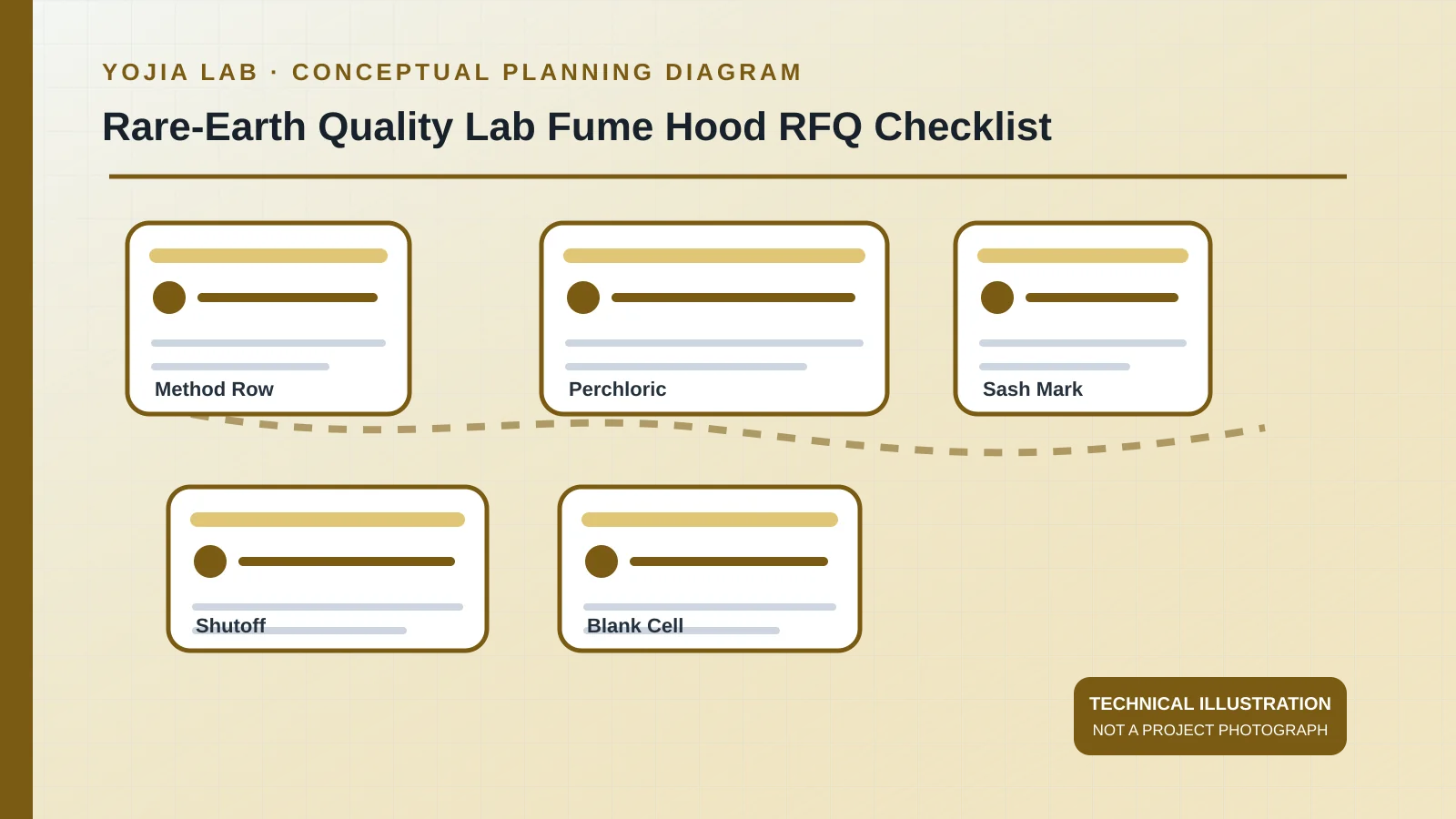
A usable sheet has five blocks: the method and its acids, the employer’s containment decision, sash and work position, shutoffs and door distance, and the building’s exhaust test. Each block names the person who may fill it. Shared phrases such as quality laboratory hood do not separate the blocks. The distinction is who owns the evidence.
Send the sheet when a factory review can answer quantity, materials of construction the campus has already named, and service locations outside the enclosure. Airflow, a perchloric duct, make-up air, and the particularly hazardous list cannot be answered from a furniture drawing. Keep those lines open. Pricing a fume hood here means refusing to complete a row the method only opened.
When these planning questions move into a quotation, list quantities, materials, and service points for the laboratory fume hood configuration in the same package used for laboratory furniture support for distributors and contractors. This article records what still needs confirmation; the approved quotation sets the supply.