01
Configuration overview
- Steel-glass and aluminium-glass references
- Service-column and PP options
- Shelf spacing and access confirmed per bench
Bench-top shelving and services
Reagent racks and service shelves should preserve usable worktop depth, equipment access, visibility, cleaning space, and safe service routing. Shelf material, spacing, load, restraint, and socket or utility integration are confirmed from the bench and workflow plan.
Final materials, dimensions, performance requirements, and compliance criteria must be confirmed in the quotation and technical review.
Request a quotation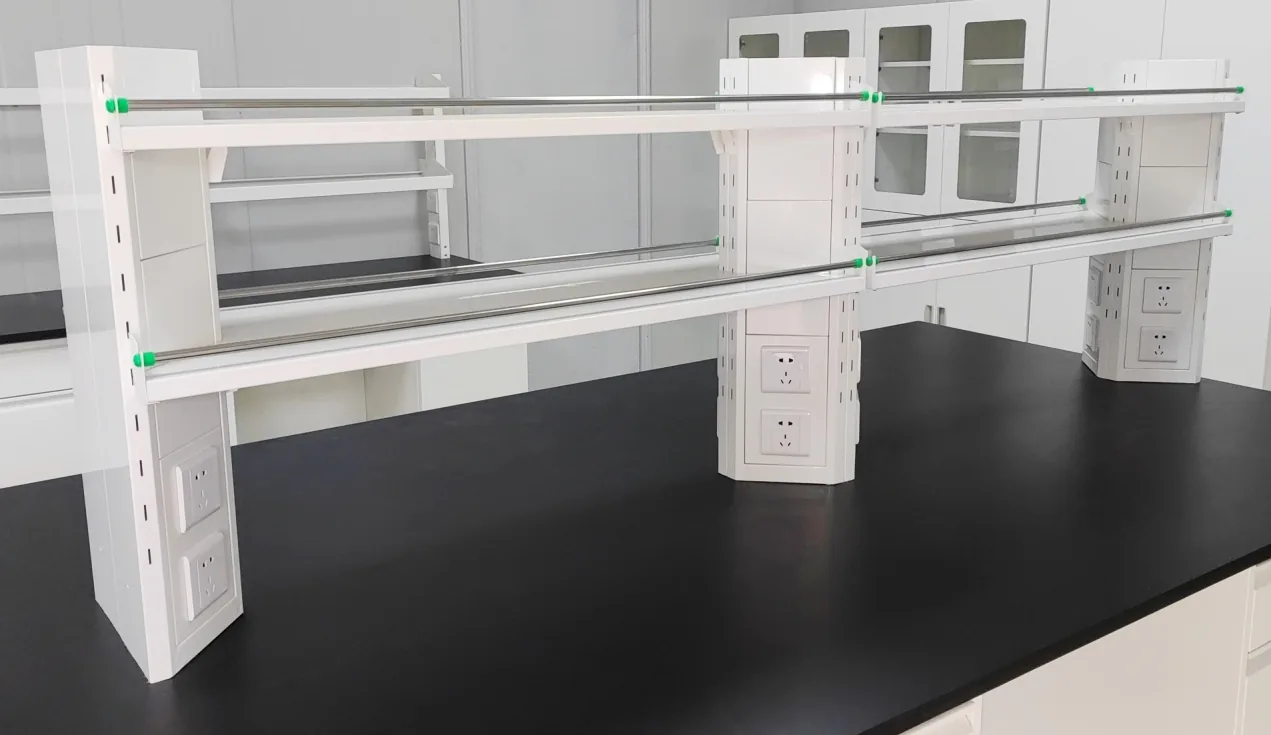
01
02
03
Product planning
Use these planning points to organize the room, equipment, service, and operating information needed before a configuration is confirmed.
Map equipment, operator reach, sample movement, tall containers, and cleaning access so the rack does not consume critical worktop depth or block the intended task.
Provide container height, shelf load, material compatibility, lip or restraint needs, desired adjustment, and whether glass, PP, or another shelf material is appropriate.
Show socket, data, water, gas, and other service positions on the bench elevation, including cable routes, isolation responsibility, destination voltage, and maintenance access.
Technical brief
These fields provide a practical review framework rather than fixed model claims. Record the agreed selection in the quotation, drawings, and technical submittal before production.
Reference model guide
Use these original YOJIA reference codes to compare common configurations and prepare an inquiry. They are planning identifiers, not copies of another manufacturer's models or fixed production guarantees.
| Reference model | Configuration | Reference dimensions | Selection notes |
|---|---|---|---|
YJ-RR-1200-1 | Single-tier reagent rack | 1200 × 300 × 750 mm | Compact bench-mounted shelf with project-selected frame, shelf, and retaining edge. |
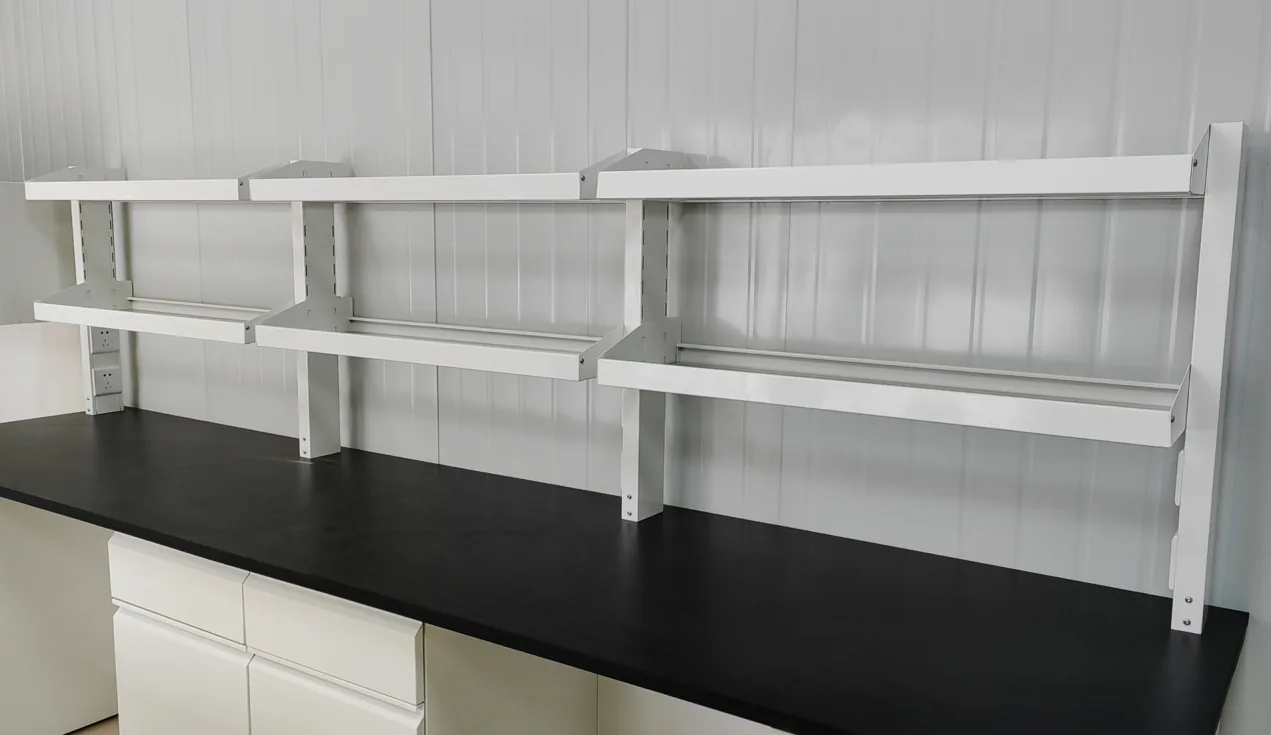
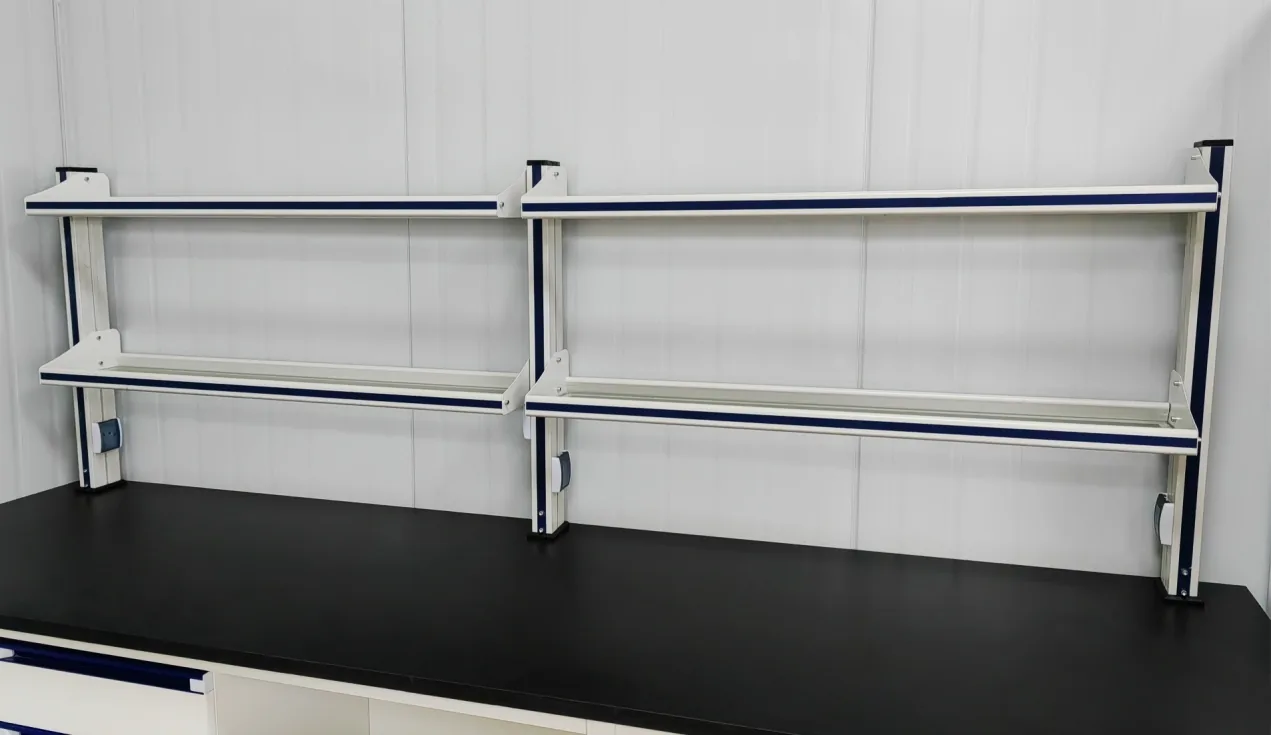
YJ-RR-1500-2 | Two-tier reagent rack | 1500 × 300 × 750 mm | General two-level rack with optional service panel and adjustable shelf positions. |
YJ-RR-1800-2 | Two-tier reagent rack | 1800 × 300 × 750 mm | Wider module coordinated with bench joints, sightlines, equipment, and utilities. |
YJ-RR-1500-S | Service reagent rack | 1500 × 350 × 900 mm | Rack and service-spine reference with outlets or fixtures scheduled separately. |
All dimensions are nominal planning references. Final materials, thicknesses, loads, ventilation criteria, fixtures, interfaces, compliance evidence, and supplied scope must be recorded in the approved quotation and technical documents.
PRODUCT VIEW
Images show reference configurations. Confirm the exact supplied model, finish, dimensions, fixtures, and accessories in the final quotation.
Buyer questions
Clear project inputs help the team identify the right configuration and the details still requiring technical review.
They can be reviewed when quantity, location, voltage, socket type, circuit responsibility, isolation, and cable route are defined by the project electrical design.
Spacing follows container and equipment height, operator reach, visibility, cleaning access, and the need to adjust or remove shelves. The approved elevation records the final arrangement.
Sometimes, but fixing, bench structure, service routing, worktop condition, clearances, and site access must be checked. Planning it with the original bench usually reduces interface uncertainty.
RFQ / Project inquiry
Share the room plan, quantity, destination, and technical requirements for a project-specific response.