01
Build a state matrix before ordering cabinets
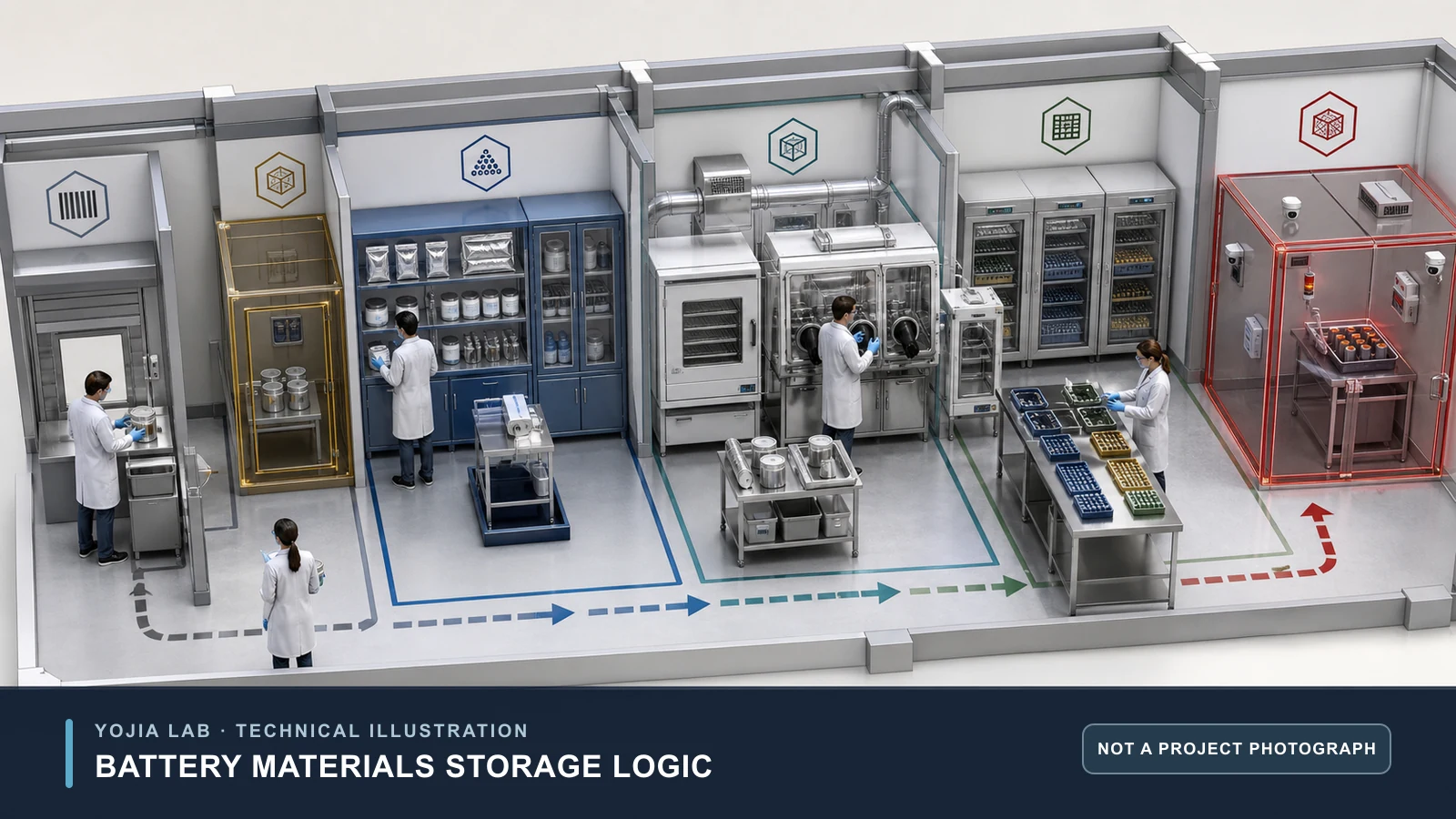
List what the laboratory actually stores, then add the attributes that change its handling. Each row should identify chemistry, physical form, package size, owner, lot or sample number, hazard information, required atmosphere, temperature range, test stage, retention period, and abnormal-condition response. The same cathode material may exist as a sealed supplier container, a released bulk lot, a working aliquot, a coated electrode, a tested specimen, and waste. Treating those forms as one stock item hides the hand-offs that determine both analytical traceability and safe space allocation.
Turn the matrix into named locations and visible statuses. A shelf address alone is insufficient if staff cannot distinguish quarantine from released stock or a routine retain from a cell awaiting investigation. Define who can change status, what record follows a split sample, when an environmental alarm places material on hold, and how capacity is counted. Storage demand should include containers, secondary containment, separation gaps, handling clearance, and temporary peaks rather than multiplying a bottle count by nominal shelf width. The result is a controlled location map, not a furniture shopping list.
02
Separate receipt stock from working aliquots
Receiving needs a place to check labels, packaging, documentation, temperature indicators where used, and visible damage before material enters active stock. OSHA's laboratory recommendations support knowing handling and storage conditions before receipt, preserving incoming labels, using a central receipt point where practical, and separating chemicals by hazard and compatibility. For this project, translate those principles into a closed-container verification bench, a discrepancy or leak response route, and a quarantine position that cannot be mistaken for usable inventory. Do not open unknown or compromised packages in an office or ordinary storage aisle.
Move only defined working quantities into preparation areas. Use traceable aliquot containers, dedicated scoops or tools where contamination control requires them, and a return rule that prevents an opened working vessel from silently rejoining unopened stock. Powder cabinets, flammable-liquid storage, cold storage, and reference-material storage may need different construction or services; the selection follows the safety data and method, not the word battery. Keep frequently used consumables close enough for disciplined replenishment while preventing benches, fume hoods, equipment service zones, and escape routes from becoming overflow storage.
03
Treat atmosphere control as a transfer chain
The Department of Energy's battery-laboratory capability inventory shows that real programs combine ordinary laboratories, dry rooms, gloveboxes, and inert transfer options according to chemistry and process. That is evidence for differentiated environments, not a universal dew-point specification. Map the exposure budget for each moisture- or oxygen-sensitive material from delivery container through drying, transfer, weighing, cell assembly, test preparation, and return. Then choose the smallest justified controlled volume and define how doors, pass-throughs, containers, and waiting positions preserve the required condition during both normal work and interruptions.
A glovebox should not become an unplanned warehouse. Argonne's battery facility separates gloveboxes by chemistry and restricts long-term storage for many users, illustrating the operational value of dedicated compatibility rules and managed capacity. Provide an external buffer for sealed items, a documented antechamber queue, positions for approved short-term in-box material, and a route for removal without mixing clean stock with used tools or residues. Specify recovery after atmosphere excursions, housekeeping, cylinder or gas supply interfaces, monitoring ownership, and maintenance access before deciding how much storage can safely depend on that enclosure.
04
Keep chemical and stored-energy hazards legible
Raw powders, binders, cleaning agents, electrolyte salts, and solvents must be assessed as chemicals; assembled cells add electrical and thermal behavior. OSHA's lithium-ion battery bulletin notes that flammable electrolyte and stored energy can combine in thermal runaway and that some battery materials have limited exposure data. Do not collapse these issues into a generic battery cabinet. Use the current safety data, process quantities, dust and exposure assessment, charging condition, cell format, and local fire strategy to define compatible storage, ventilation or containment, ignition control, detection, separation, and emergency access. Furniture alone cannot establish that strategy.
Give new cells, formation or cycling queues, retained cells, post-test cells, and suspect cells different status locations. Record relevant test state and handling restrictions without inventing a universal state-of-charge limit. A swollen, leaking, hot, vented, mechanically damaged, or unidentified cell needs a predetermined isolation and escalation route rather than a red sticker in the normal rack. EPA guidance for end-of-life batteries recommends preventing damage and separating damaged, defective, or recalled batteries; use that U.S. waste context as a planning reference, then have the project's responsible specialists define the lawful containers, distances, monitoring, response, and disposal route.
05
Commission locations, limits, and exceptions
Commission the storage system with representative journeys, not empty cabinets. Walk an accepted powder lot, a moisture-sensitive foil, a refrigerated reagent, a working electrolyte bottle, a coated electrode batch, a cell awaiting cycling, a completed retain, and an abnormal cell. Test barcode or label reading, custody transfers, access permissions, secondary containers, atmosphere transitions, alarm visibility, manual handling, cleanup access, and waste pickup. Challenge full and nearly full conditions so temporary staging does not appear later in door swings, aisles, instrument clearances, or emergency equipment zones.
Handover should name each location, allowed contents, capacity basis, responsible owner, inspection frequency, environmental response, and release or disposal decision. Link the room schedule to the inventory system and to a review trigger for new chemistries, larger cell formats, changed test states, increased throughput, revised retention, or different waste routes. Local law, approved methods, safety data, fire engineering, insurers, and emergency services may impose project-specific requirements. The planning document should show where those decisions belong and preserve unresolved items, never claim that a cabinet label or generic layout provides compliance.