01
The band is the sample, not the tank
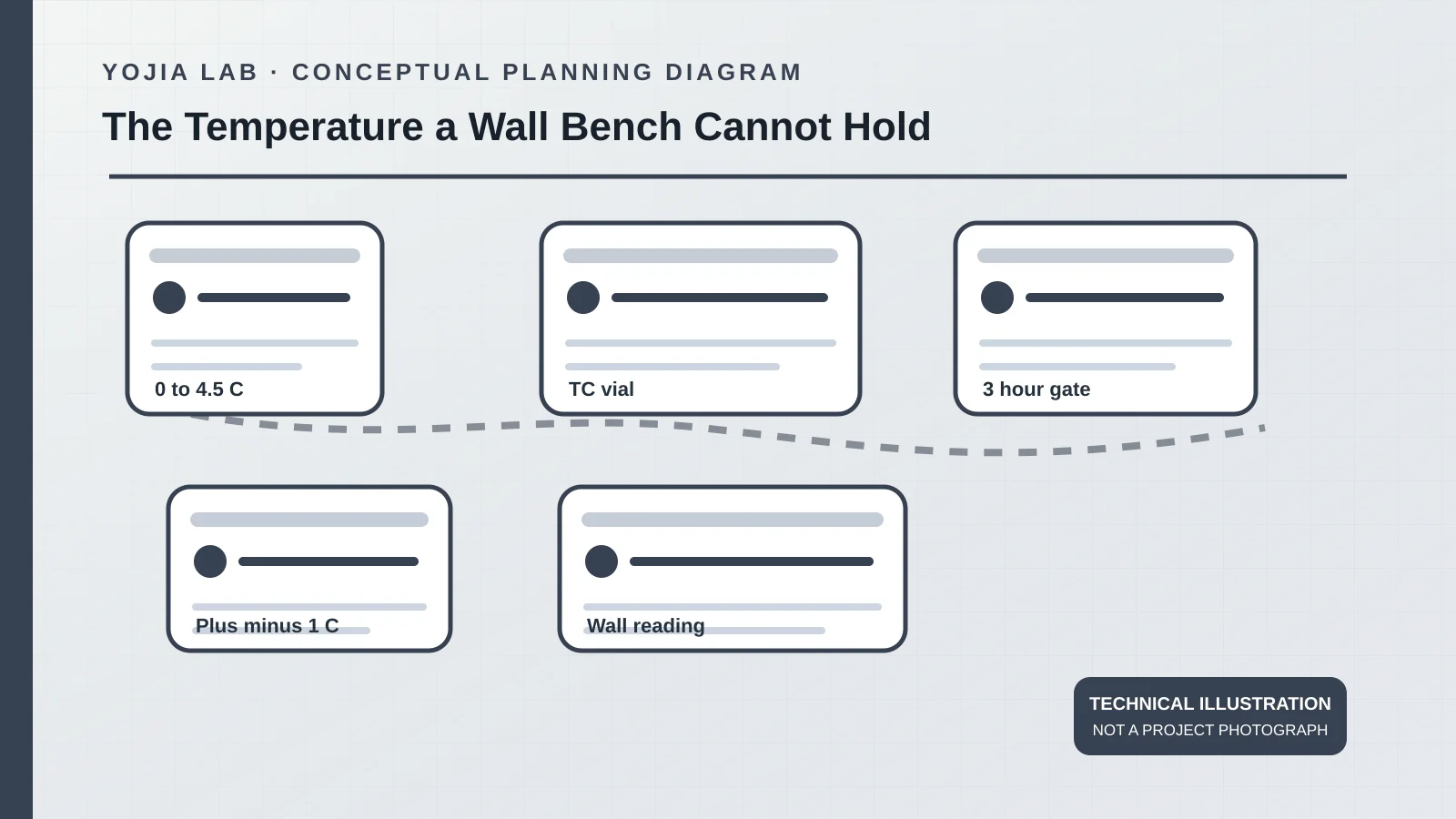
Table 1 of the 2019 ordinance cools raw milk in the farm tank to 10°C or less within four hours of the start of milking, and to 7°C or less within two hours after milking ends, if later blend temperatures stay at or below 10°C. The sample note is different: milk submitted for testing is cooled and maintained at 0°C to 4.5°C. A sample above 4.5°C but no warmer than 7.0°C is addressed only when it is under three hours old and the temperature has not increased. Three hours alone is not permission to let the bottle warm.
Appendix B has the hauler label the producer sample with identity, temperature, date, and time, take a temperature-control sample at the first stop, and put samples immediately into the storage case. In transit they are held between 0°C and 4.5°C, and the container is not filled more than three-quarters full. The tank-truck items repeat that band, require the control sample, and have an approved thermometer checked every six months, with the result and date on the carrying case. That sentence prints no plus-or-minus tolerance.
02
Oregon names the refrigerator the ordinance leaves implied
The Oregon Department of Agriculture sampler manual, 2023 version, revised January 2023, is a state training text pointed at Appendix B. Its equipment list asks for refrigerant holding samples between 0°C and 4.5°C, and for a pocket thermometer certified every six months at ±1°C (2°F). The ordinance tank-truck thermometer sentence does not contain that tolerance. The two lines stay in two cells. Oregon also immerses the thermometer sensor and dipper in sanitizer for at least one minute before they enter the milk. That minute is a field step, not time on a laboratory surface.
After the sample is identified, the Oregon manual says to place the samples immediately in a refrigerator or a sample storage case, maintained between 0°C and 4.5°C. It repeats the three-quarter fill limit. The temperature-control vial in this manual is labelled with collection time, date, temperature, location, sampler identity, and the letters TC. Immediate is the operative word. A wall laboratory bench can be where the case is opened and the pocket thermometer is read. It is not the refrigerator, and it is not the insulated case. Reading the vial and then leaving the rack on that bench while a form is found is a different act from the sentence Oregon printed.
03
One study's clock is not the ordinance clock
Ayele and others, BMC Microbiology, 2017, collected a cross-sectional set of milk and swab samples in Sebeta, central Oromia, Ethiopia. Composite cow samples were 10 mL. Samples moved in an icebox with ice packs to the microbiology laboratory of the College of Veterinary Medicine and Agriculture, Addis Ababa University, at Bishoftu. On arrival they were stored at 4°C for a maximum of 24 hours until culture the next day. Four degrees Celsius sits inside the 0°C to 4.5°C band, but the paper prints a single storage set-point, not a check that the samples stayed above freezing and at or below 4.5°C. The 24-hour maximum is that study's hold. The ordinance passages used here do not print it.
That 24-hour maximum belongs to the Sebeta samples in that paper. It does not amend the ordinance band, and it does not turn a wall laboratory bench into a 4°C store. Using the paper as a Grade A receiving rule would move one Ethiopian research protocol into a U.S. ordinance.
04
What the wall bench may actually carry
The useful split is physical. The object that must stay between 0°C and 4.5°C is the sample, in a refrigerator or in a case with refrigerant, from the moment the ordinance and the Oregon manual say it is placed there. The object that can sit on a wall laboratory bench is the record: producer identity, time, the temperature-control reading, and the thermometer's six-month check. If the project is training Oregon samplers, the thermometer cell also carries ±1°C and the six-month certification. If the project is citing only the ordinance tank-truck item, the cell carries the six-month check and the carrying-case note, without that tolerance invented on top.
The warmer exception does not create a bench allowance. It applies when the sample is above 4.5°C, no higher than 7.0°C, less than three hours after collection, and has not increased in temperature. A bottle that has already climbed while someone wrote the ledger fails the last gate even if the clock is still short. The 7°C product limit for milk in the tank is a third number and should not be typed as the sample band. No depth, module length, or worktop trade name appears in these three documents. Those cells stay open until a drawing, not a temperature note, fills them.
Before pricing, place the usable wall length, modules, and service points for the wall laboratory benches with the room notes above. Final materials and supplied scope remain the approved quotation.