01
Sort holds by the state the method creates
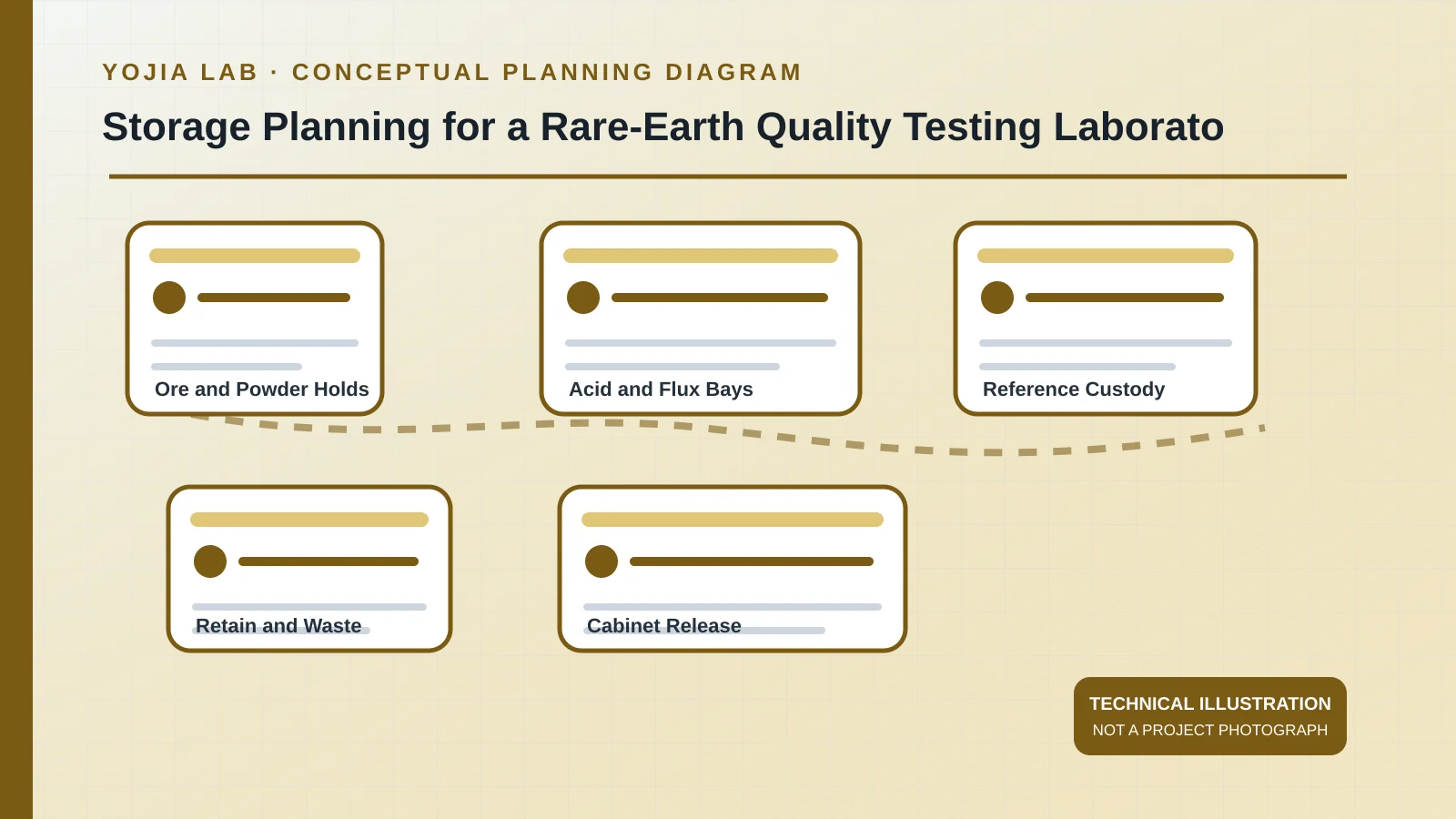
Start from the method, not from a cabinet catalogue. A DOE National Energy Technology Laboratory report on rare-earth ICP-MS shows how one geologic powder becomes several objects: a dried or ashed portion, a mix with lithium metaborate, a fused glass, a nitric-acid digest, and a further dilution. Each object has a different container, hazard, and reason to stay identifiable. Incoming ore or concentrate is not the same hold as that digest.
USGS guidance on geochemical data asks that samples travel in closed containers, that chilled items stay cold, and that background material not share a parcel with samples that might contaminate it. Apply the same idea inside the room. Give receipt, grindings, fusion, digest, instrument queue, retain, and waste their own labelled locations. A bench that is also the overnight store mixes those states.
- Method and sample state
- Container and seal
- Owner and next step
- What must not sit beside it
02
Keep powders, flux, and acids on different rules
OSHA's non-mandatory laboratory appendix says chemicals should be separated by hazard category and compatibility, with the safety data sheet followed for storage. Oxidizers, reducing agents, and fuels stay apart. Peroxide formers are dated at receipt and again at opening, away from heat and light. Flammable liquids that need cold storage go in a laboratory-grade flammable refrigerator, not a food fridge. Chemicals do not live in the hood, on the floor, in an exit path, or on the open benchtop.
Those rules matter in a rare-earth room because hydrofluoric or nitric digest acids, borate flux, and fine powders fail in different ways. A polypropylene or stainless bench can give a wipeable surface once the review names the chemicals. It does not decide compatibility. Open shelves, where the appendix allows them, need a secure fixing and a lip, plus secondary containment when a spill would spread. Highly hazardous stock belongs in a ventilated, access-controlled place designated for that purpose.
03
Give reference powders and retains their own custody
USGS notes that a reference material only checks accuracy when its matrix and concentration resemble the unknowns. A seawater standard does not stand in for a shale, and a very high reference does not check a trace rare-earth result. Blind reference powders should look like the other samples so they are not handled as special objects. That means a custody location, not a decorative shelf by the instrument.
The same lecture series warns that cardboard offers little moisture protection and that glass jars with lined lids are preferred when volatile elements such as mercury matter. Analyte can also be lost to container walls. Retains therefore need a written container, humidity expectation, and retrieval rule. National Academies text drawn from Prudent Practices adds that a storeroom should not double as a prep bench, that opened highly toxic containers sit in unbreakable secondary containers, and that stock is checked at least yearly for deterioration. One person controls that room during working hours.
04
Size the cabinet only after the hazard review
Count locations, not just bottles. Each location records capacity, container height, whether the door locks, whether the cabinet is vented, and who holds the key. Small working amounts of acid may stay near the digest bench if the safety review allows it. Bulk acid, flammable solvent, and waste do not share that spot. Waste needs a compatible, closed, labelled container and a path out of the room that does not cross the clean reference shelf.
Laboratory storage cabinets, reagent racks, and acid-conscious work surfaces can then be scheduled as furniture. The schedule should show the lip, the tray, the vent opening if one was required, and the clear floor in front of the door. None of those products is an approved flammable cabinet or a corrosion guarantee unless the project names a specific, documented construction and the safety reviewer accepts it. Until then the row stays provisional.
Where the storage duty is considering a polymer cabinet or bench, review PP laboratory furniture on its own. A material name does not show that it fits the chemicals, cleaning method, or fire requirements.