01
The extraction study names the tube and the solvent
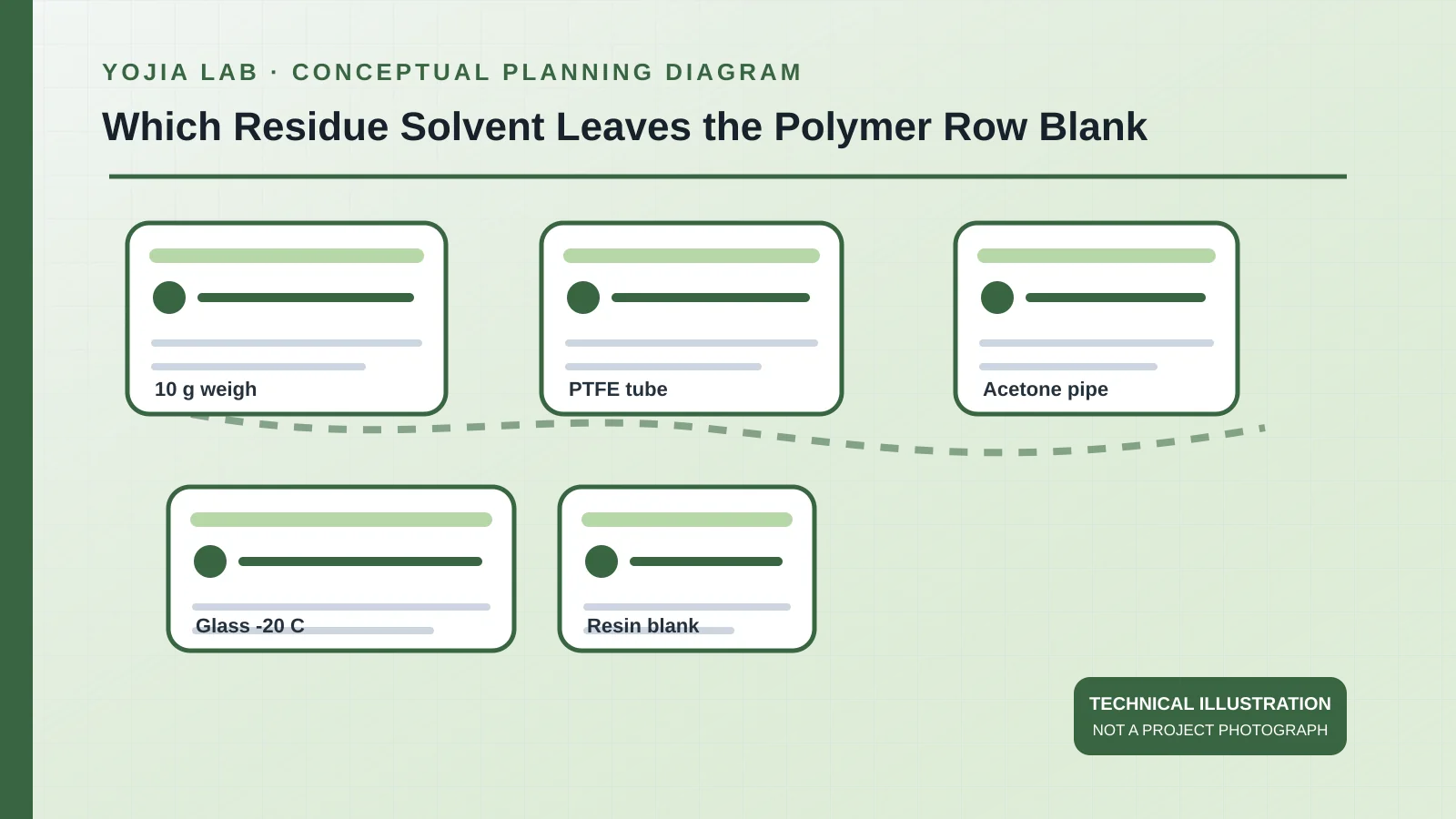
EURL-FV report 2022-M51 is a calibration study, not a furniture standard. It tested ways of calibrating 171 pesticides from the European Union multiannual control programme, on tomato, orange, and avocado, with extra calibration extracts of potato, strawberry, and olive. The QuEChERS steps weigh 10 g ± 0.1 g into a 50 mL PTFE tube, add 10 mL of acetonitrile, and shake 4 minutes. Salts are 4 g magnesium sulphate, 1 g sodium chloride, 1 g trisodium citrate dihydrate, and 0.5 g disodium hydrogen citrate sesquihydrate, then 5 minutes at 3700 rpm. A 5 mL aliquot goes into a 15 mL PTFE tube.
The gas-chromatography path in that same report evaporates the extract under nitrogen and reconstitutes it in ethyl acetate. The liquid-chromatography path dilutes extract with water. Those two endings do not share a vial. SANTE/11312/2021 v2026, paragraph C9, warns that concentrating an extract can precipitate matrix and lose pesticides, and that diluting methanol or acetonitrile extracts with water can also lose pesticides because solubility falls. Paragraph C10 says the evaporation temperature should stay as low as practicable, and prefers a dry-nitrogen stream or vacuum centrifugal evaporation over air, because air is more likely to oxidize the extract or bring in water.
02
The pipe report classes acetone, and only as pipe
ISO/TR 10358:2021, second edition, June 2021, collects chemical-resistance data for thermoplastics used to make piping components. Its scope names polypropylene as PP-R, PP-RCT, PP-H, and PP-B. The introduction calls the tables a preliminary collection for components that are not subjected to pressure or other stresses. Section 5.1 repeats the limit: the marks S, L, and NS are only suitable for piping components without internal or external mechanical stress, and the examples given are internal pressure and flexural stress. Mixtures, and percentages that the tables do not list, are to be checked with the material supplier.
In the public preview of Table 1, acetone (CAS 67-64-1, boiling point printed as 56 °C) is classed for polypropylene as S at 20 °C on the technical-grade liquid row, L at 40 °C in that block, L at 60 °C on the row that carries the technical-grade gas label, and NS at 80 °C and at 100 °C. A separate block for acetone up to 10 percent reads S at 20 °C, L at 40, 60, and 80 °C, and NS at 100 °C. A residue bottle is not that dilute solution, and a loaded bench is not an unstressed pipe. This preview does not class acetonitrile or ethyl acetate. The 2021 edition cancels the 1993 report, so an older chart is not this table.
03
A recovery percentage does not grade a surface
SANTE paragraph G6 asks for a mean recovery of 70–120 percent and a repeatability RSDr at or below 20 percent. An exceptional mean may sit outside that band if it is consistent and not below 30 percent or above 140 percent. Paragraph G3 asks for at least five replicates at the targeted limit and at one higher level.
None of those sentences mentions a bench resin. A 70–120 percent recovery is a statement about the analytical method under the validation design. It is not a 24-hour spot test, and it is not the pipe report’s S. A laboratory can meet G6 on a surface that later stains, and it can miss G6 on a surface that a pipe chart marked S. The two records answer different questions. Paragraph C11 adds a storage fact that does touch furniture layout: analyte stability in extracts is evaluated during validation, refrigerator or freezer storage reduces degradation, and losses can occur in vials sitting at room temperature on an autosampler rack.
04
Zone the solvents before the resin is typed
A workable drawing gives each liquid its own line. The balance line carries the 10 mg stock weigh and, where 2022-M51 is actually the method, the 10 g ± 0.1 g portion. The extraction line carries acetonitrile, the salt masses, the 4-minute shakes, and the PTFE tube. The gas-chromatography line carries ethyl acetate and the nitrogen evaporator, with the temperature kept as low as C10 requires. The stock line carries the solvent the laboratory really uses, the dark cold storage, and the glass vial from the study when that is the container.
SANTE is guidance for official laboratories in the European Union and says it supports implementation of ISO/IEC 17025. It is not a building code for every residue room outside that system. A cereals method that adds water before extraction, which SANTE paragraph C7 recommends for low-moisture commodities, is a different wetting step and was not the procedure timed in 2022-M51. Heat from milling is another warning in SANTE paragraph C3: particle size preferably under 1 mm, without extensive heating, because heat can lose some pesticides. That mill does not belong on the extraction top.
Where the storage duty is considering a polymer cabinet or bench, review PP laboratory furniture on its own. A material name does not show that it fits the chemicals, cleaning method, or fire requirements.